
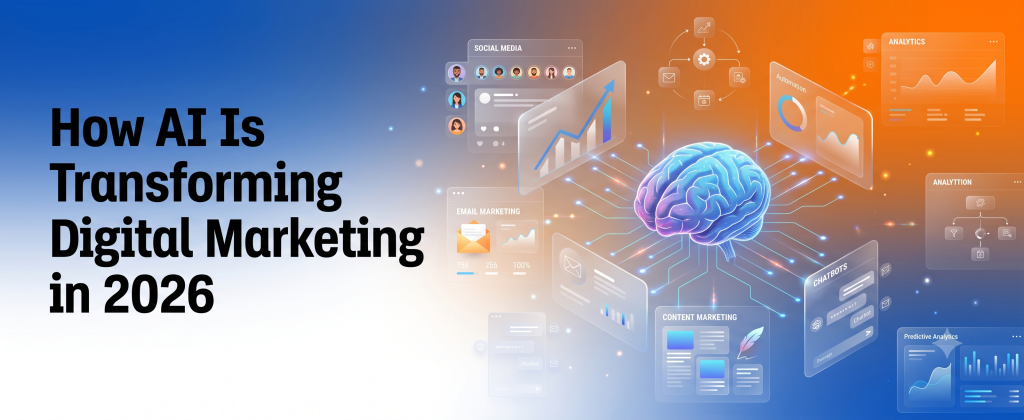
A few years ago, most marketers used AI for one or two small tasks, maybe writing a subject line or scheduling a social post. Today, that’s changed completely.
AI in digital marketing now touches nearly every part of a campaign, from the first keyword research session to the final sales report. And honestly, if you’re not using it yet, you’re already behind competitors who are.
This shift isn’t hype. It’s a real, measurable change in how brands find customers, talk to them, and keep them coming back. Let’s walk through what’s actually happening.
Why AI Has Become Central to Digital Marketing in 2026
Marketing teams are under constant pressure to do more with less. Budgets are tighter, customers expect instant responses, and there’s simply too much data for humans to process alone.
AI fills that gap. It can scan thousands of data points in seconds, spot patterns humans would miss, and act on them immediately.
That’s why AI-driven digital marketing has moved from “nice to have” to “how business gets done.”
How AI Is Changing SEO
Search engine optimization used to be about stuffing keywords and building backlinks. Now, AI-powered search engines understand intent, context, and even conversational language.
Tools like AI-assisted keyword research platforms help marketers find what people are actually searching for, not just guess at popular terms.
Smarter Keyword Research and Content Gaps
AI tools can analyze competitor content, identify missing topics, and suggest what to write next. This saves hours of manual research.
Voice and Conversational Search
With more people using voice assistants, AI helps optimize content for natural, question-based queries instead of short, robotic phrases.
AI’s Role in Content Marketing
Content creation has been one of the biggest areas of change. AI writing assistants can draft blog outlines, generate product descriptions, and even suggest headlines that perform better.
But here’s the thing: the best content still needs a human touch. AI handles the heavy lifting, while writers add real experience, opinions, and storytelling that readers connect with.
For example, an e-commerce brand might use AI to draft dozens of product descriptions quickly, then have a copywriter refine the tone to match the brand’s voice.
Social Media Marketing Gets Smarter
Social platforms are flooded with content, so standing out is harder than ever. AI helps by predicting the best time to post, suggesting trending hashtags, and analyzing which types of posts get the most engagement.
Some brands now use AI to generate multiple ad variations automatically, then let the algorithm test which one performs best in real time.
Paid Advertising and PPC Optimization
Running ads manually used to mean constant guesswork. Now, AI-powered bidding systems adjust budgets and targeting automatically based on live performance data.
This means fewer wasted ad dollars and better return on investment, especially for small businesses that can’t afford a full-time ad specialist.
Real-Time Campaign Adjustments
If an ad starts underperforming, AI can pause it, tweak the targeting, or reallocate budget to a better-performing version, often within minutes.
Email Marketing Personalization
Generic email blasts don’t work anymore. AI now helps marketers send personalized emails based on browsing history, purchase behavior, and even the time a person usually checks their inbox.
This kind of customer personalization leads to higher open rates and, more importantly, more conversions.
Customer Personalization Across Every Channel
AI doesn’t just personalize one channel, it connects the dots across all of them. A customer’s website behavior, email clicks, and social interactions all feed into one profile.
This creates a smoother, more relevant experience, whether someone is browsing a website or scrolling through ads.
Chatbots and Automation
Customer service has changed a lot too. AI chatbots now handle common questions instantly, freeing up human support teams for more complex issues.
Automation tools also handle repetitive marketing tasks like scheduling posts, sending follow-up emails, and generating weekly performance reports.
Analytics and Predictive Insights
Perhaps the biggest advantage of AI is in analytics. Instead of just showing what happened last month, AI can now predict what’s likely to happen next.
This helps marketers plan campaigns before trends even peak, rather than reacting after the fact.
Benefits of AI in Digital Marketing
- Saves time on repetitive tasks
- Improves targeting accuracy
- Reduces ad spend waste
- Delivers more personalized customer experiences
- Provides faster, deeper data insights
Challenges Businesses Should Keep in Mind
AI isn’t perfect, and it’s worth being realistic about the downsides.
- Over-reliance on automation can make content feel generic if there’s no human editing involved.
- Data privacy concerns are growing as AI tools collect more customer information.
- Learning curve exists, since teams need training to use these tools effectively.
Future Trends to Watch
Looking ahead, expect AI to get even better at understanding context and emotion, not just data points. Hyper-personalized video content, AI-generated ad creatives, and smarter voice search optimization will likely become standard practice.
Best Practices for Marketers in 2026
- Use AI to support your strategy, not replace human judgment entirely.
- Always review AI-generated content before publishing.
- Combine AI insights with real customer feedback.
- Test new AI tools on small campaigns before scaling up.
- Keep your brand’s voice consistent, even when using automation.
Actionable Tips for Businesses
If you’re just getting started, don’t try to automate everything at once. Pick one area, like email personalization or social scheduling, and master it first.
Track your results carefully. AI tools are powerful, but they still need clear goals and human oversight to work well.
Conclusion
AI is no longer a futuristic idea in marketing, it’s the foundation of how modern campaigns are built and run. From SEO to email to customer service, AI in digital marketing is helping businesses work smarter, not just harder.
That said, the brands that succeed in 2026 won’t be the ones that rely on AI blindly. They’ll be the ones that blend AI’s speed and data power with genuine human creativity and judgment.
The tools will keep improving. The businesses that adapt thoughtfully, rather than rushing in without a plan, will be the ones that come out ahead.
Frequently Asked Questions
1. How is AI changing digital marketing in 2026?
AI is automating tasks like content creation, ad targeting, and customer personalization, allowing marketers to make faster, data-driven decisions.
2. Is AI replacing digital marketers?
No. AI handles repetitive and data-heavy tasks, but human creativity, strategy, and judgment are still essential for successful campaigns.
3. What are the best AI tools for digital marketing?
Popular categories include AI writing assistants, chatbot platforms, predictive analytics tools, and automated ad-bidding systems. The right tool depends on your specific goals.
4. Can small businesses benefit from AI marketing tools?
Yes. Many AI tools are affordable and help small businesses compete with larger brands by improving targeting and reducing wasted ad spend.
5. What are the risks of using AI in marketing?
Common risks include generic-sounding content, data privacy concerns, and over-reliance on automation without human review.