
SEO (Search Engine Optimization) is a digital marketing strategy used to improve a website’s visibility on search engines like Google. It helps websites rank higher in search results, attract organic traffic, and reach the right audience. SEO involves keyword research, content optimization, technical improvements, faster website performance, mobile friendliness, and quality backlinks. A well-optimized website builds trust, increases brand awareness, and improves user experience. SEO is important for businesses because it helps generate leads, increase conversions, and support long-term online growth without relying completely on paid advertising.
It is one of the most effective ways to strengthen your digital presence.
Why SEO Matters in the Digital World
In today’s digital world, SEO is essential for building a strong online presence and reaching potential customers effectively. It helps websites rank higher on search engines like Google, increasing visibility and driving organic traffic. SEO improves user experience through better website speed, mobile responsiveness, and quality content. It also helps businesses target the right audience, build trust and credibility, generate leads, and increase conversions. Unlike paid advertising, SEO supports long-term growth and delivers lasting results, making it one of the most valuable digital marketing strategies for businesses of all sizes.
Multiple SEO Approaches, One Goal — Digital Growth
SEO uses different strategies to improve website visibility, increase organic traffic, and strengthen online presence. These strategies include On-Page SEO for content and keyword optimization, Off-Page SEO for building authority through backlinks, Technical SEO for better website performance, and Local SEO to target nearby customers.
Together, these SEO approaches help businesses rank higher on search engines like Google and achieve long-term digital growth.
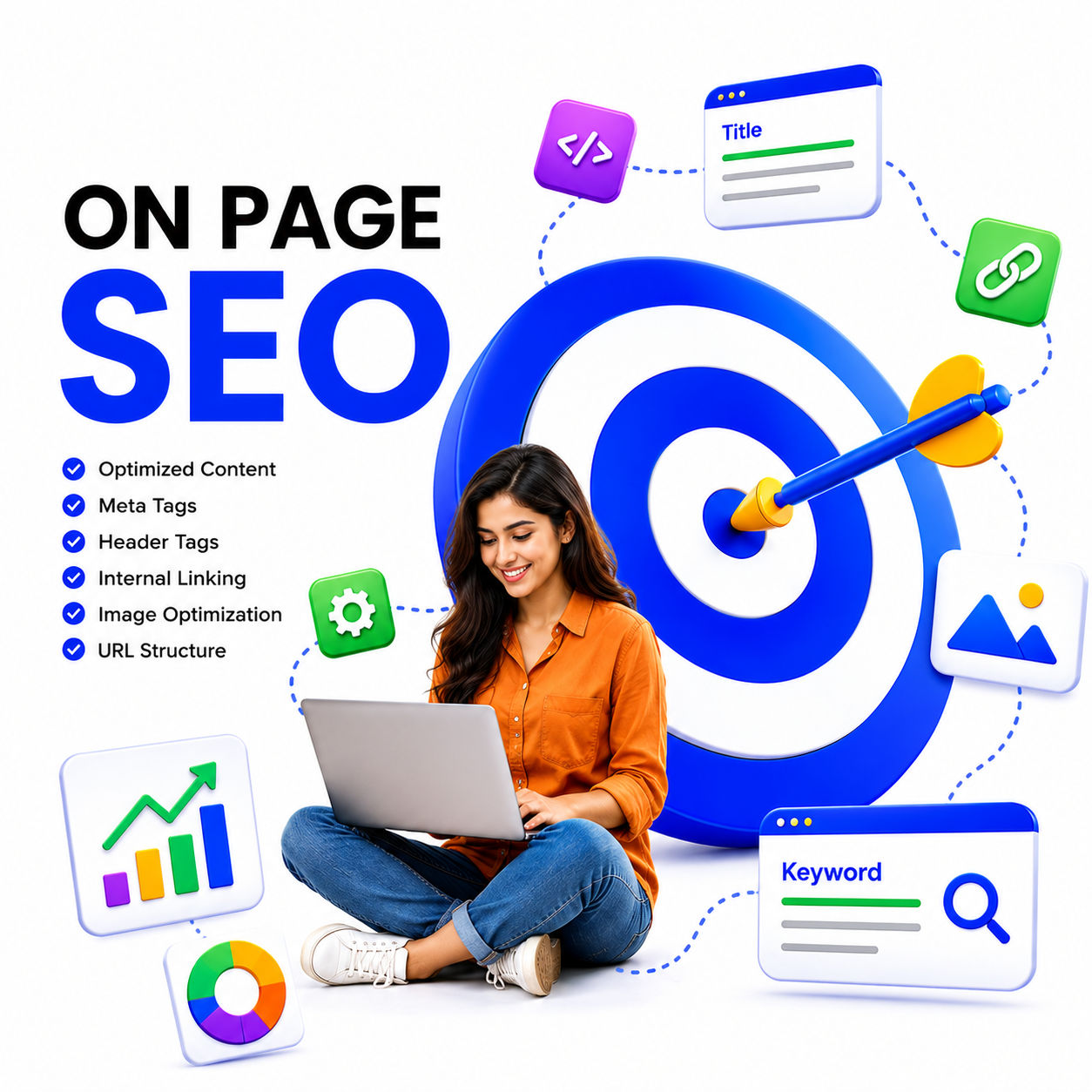
ON-Page SEO
On-Page SEO is the art of optimizing your website to rank higher and attract the right audience organically. It is like decorating and organizing a shop beautifully so customers can easily find what they need and enjoy their experience. It includes smart keyword usage, engaging content, optimized titles and headings, better images and URLs, internal linking, and mobile-friendly design. A strong On-Page SEO strategy helps your website rank higher, attract the right audience, boost traffic, and turn visitors into loyal customers.
Types of ON-Page SEO
-
Content SEO
Focuses on creating high-quality, informative, and keyword-rich content that matches user intent.
-
Keyword Optimization
Using the right keywords naturally in titles, headings, URLs, and content to improve search visibility.
-
Meta Tag Optimization
Optimizing title tags and meta descriptions to increase rankings and click-through rates.
-
Heading & Structure SEO
Proper use of H1, H2, and H3 tags to organize content clearly for users and search engines.
-
Image SEO
Optimizing image size, alt text, and file names to improve loading speed and visibility.
-
URL Optimization
Creating short, clean, and SEO-friendly URLs that are easy to understand.
-
Internal Linking
Linking related pages within the website to improve navigation and page authority.
-
Mobile-Friendly SEO
Ensuring the website works smoothly on mobile devices with responsive design.
-
User Experience (UX) SEO
Making the website easy to navigate, visually appealing, and engaging for visitors.
-
Page Speed Optimization
Improving website loading speed for better user experience and rankings.
OFF-Page SEO
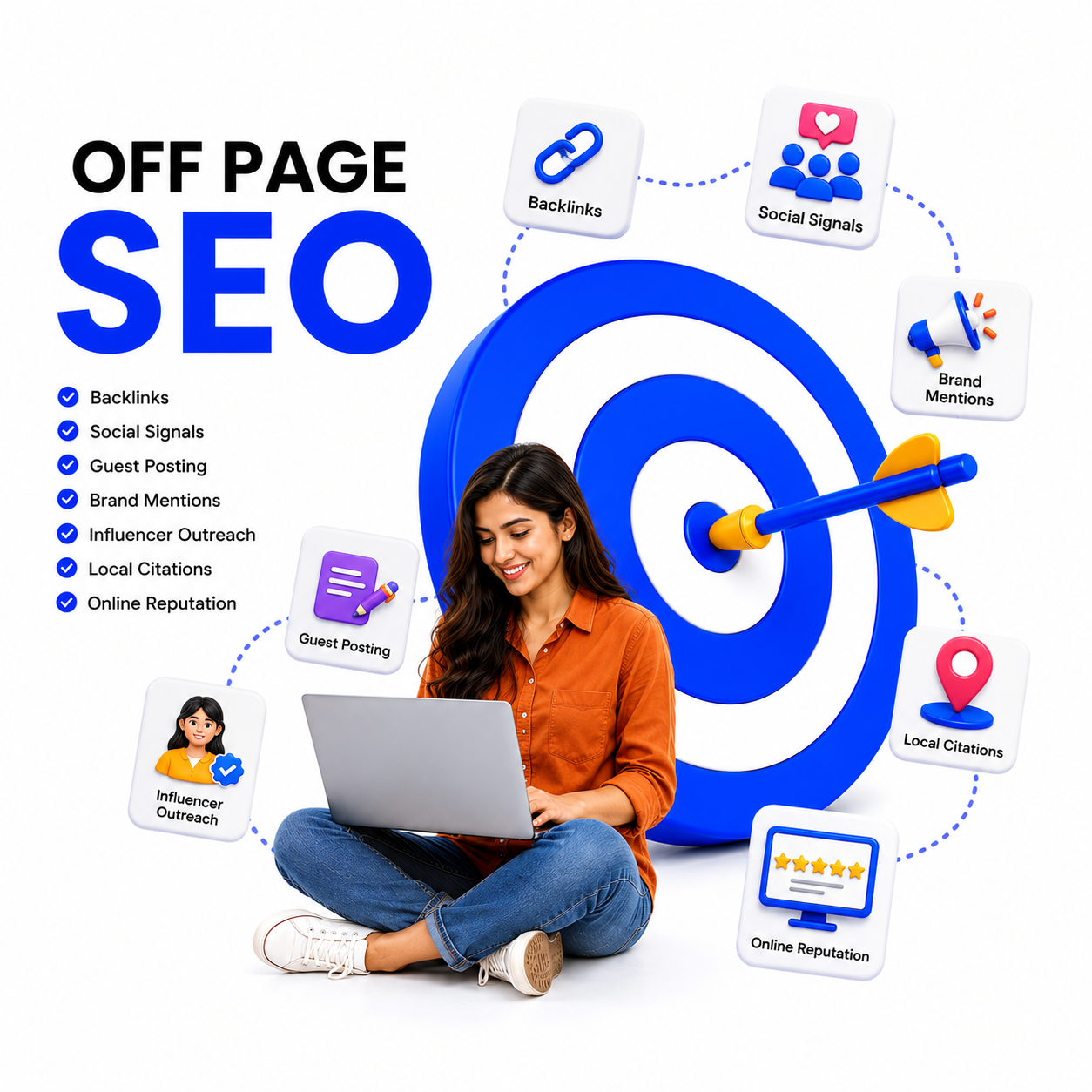
Types of OFF-Page SEO
-
Backlink Building
Getting links from other websites to improve authority and rankings.
-
Guest Posting
Publishing content on other websites to gain traffic and quality backlinks.
-
Social Media Marketing
Promoting content on social platforms to increase reach and engagement.
-
Brand Mentions
Increasing online references of your brand to build trust and visibility.
-
Influencer Outreach
Collaborating with influencers to promote your brand and attract audiences.
-
Local SEO & Citations
Optimizing business listings and local mentions to improve local search visibility.
-
Online Reputation Management
Managing reviews and online presence to maintain a positive brand image.
-
Content Marketing
Creating valuable content that attracts users and encourages sharing.

Technical SEO
Technical SEO focuses on optimizing the backend structure of a website to improve its performance and search engine visibility. It includes improving website speed, mobile responsiveness, site security, craw lability, indexing, URL structure, XML sitemaps, and fixing technical errors. Technical SEO helps search engines like Google easily understand and rank your website while also enhancing user experience. A technically optimized website loads faster, performs smoothly across devices, and supports better rankings, higher traffic, and long-term digital growth. It forms the foundation of a strong and successful SEO strategy.
Core Pillars of Technical SEO
-
Website Speed Optimization
-
Mobile-Friendliness
-
HTTPS & Website Security
-
XML Sitemap
-
Crawlability & Indexability
-
Structured Data (Schema Markup)
-
Fixing Broken Links & Errors
-
SEO-Friendly URL Structure
-
Core Web Vitals
-
Canonical Tags & Duplicate Content Management
SEO Techniques That Turn Traffic Into Growth
Black Hat SEO
Black Hat SEO refers to unethical and manipulative techniques used to improve a website’s ranking on search engines by exploiting algorithm loopholes rather than delivering real value to users. These practices violate search engine guidelines, especially Google’s policies, and may generate quick results, but they carry serious risks such as penalties, de-indexing, or permanent bans. Common black hat techniques include keyword stuffing, cloaking, hidden text, link farms, private blog networks (PBNs), doorway pages, and misleading clickbait content. In simple terms, Black Hat SEO is like taking shortcuts in the digital world — fast results today, but heavy consequences in the long run.
White Hat SEO
White Hat SEO refers to ethical and search engine-approved strategies used to improve a website’s visibility by focusing on genuine value and user experience. It includes high-quality content creation, proper keyword optimization, mobile-friendly design, fast website speed, quality backlinks, and technical optimization that follows Google’s guidelines. White Hat SEO is built on trust, transparency, and long-term credibility, helping websites grow naturally by delivering meaningful answers users truly search for. It is like planting and nurturing a healthy tree — growth may take time, but the roots become strong, stable, & long-lasting. A smart White Hat SEO strategy builds rankings, organic traffic, and lasting digital authority.
Gray Hat SEO
Gray Hat SEO is a middle-ground strategy that blends ethical White Hat SEO practices with risky Black Hat SEO tactics that push search engine guidelines without completely breaking them. It may involve techniques like using expired domains, large-scale guest posting, automated content creation, or strategic link-building shortcuts to gain quicker rankings. Gray Hat SEO is like adding extra fuel to a fire to make it burn brighter and faster — the results may look impressive for a while, but if not controlled carefully, the same fire can quickly become dangerous. While it can produce short-term visibility & traffic growth, long-term success still depends on authenticity, trust, & user-focused optimization.
Power Up Your SEO Growth with Smart Tools & Strategies

Google Search Console

Google
Analytics

Ahrefs

SEMrush

Moz
Screaming Frog

PageSpeed Insights

Yoast SEO

AnswerThePublic
Frequently Asked Questions
SEO (Search Engine Optimization) is the process of improving your website to rank higher on search engines like Google. It is important for businesses because it increases online visibility, attracts targeted visitors, builds brand credibility, and helps generate more leads and sales. SEO also improves website content, speed, user experience, and overall long-term online growth.
SEO usually takes around three to six months to show noticeable results, depending on your website, competition, industry, and SEO strategy. Factors like content quality, keyword difficulty, website optimization, and backlinks influence growth speed. Although SEO requires patience, it delivers long-term benefits through higher rankings, organic traffic, improved visibility, and business growth.
Yes, SEO can work without blogging if your website has strong optimization, quality pages, proper keywords, technical SEO, and backlinks. However, blogging helps improve rankings by adding fresh content, targeting more keywords, and increasing organic traffic. A well-maintained blog also boosts authority, user engagement, and long-term visibility on search engines like Google.
Yes, SEO helps increase website traffic and leads by improving your visibility on search engines like Google. It attracts targeted users who are actively searching for your products or services. Effective SEO also enhances website content, user experience, and credibility, helping businesses generate quality leads, higher engagement, and long-term organic growth online.
Backlinks improve search engine rankings by acting as trust signals from other websites to your site. High-quality backlinks help search engines understand that your content is valuable, relevant, and credible. They increase website authority, improve online visibility, drive referral traffic, and support better rankings on search engines like Google for targeted keywords over time.
You can do basic SEO yourself by optimizing content, keywords, and website structure, especially for small websites or beginners. However, hiring an SEO agency provides expert strategies, advanced tools, technical optimization, and faster results. Agencies also save time, handle competition effectively, and help businesses achieve stronger rankings, traffic, and long-term online growth.
Yes, SEO works very effectively for small businesses by improving online visibility and helping them reach local and targeted customers. It increases website traffic, builds brand credibility, and generates quality leads without relying only on paid advertising. With the right SEO strategy, small businesses can compete with larger brands and achieve long-term growth online.
Yes, SEO can help businesses reach both local customers and global audiences depending on the strategy used. Local SEO targets nearby customers through location-based searches, while global SEO focuses on broader keywords for worldwide visibility. With proper optimization, businesses can increase rankings, attract targeted traffic, and expand their online presence across different markets effectively.