
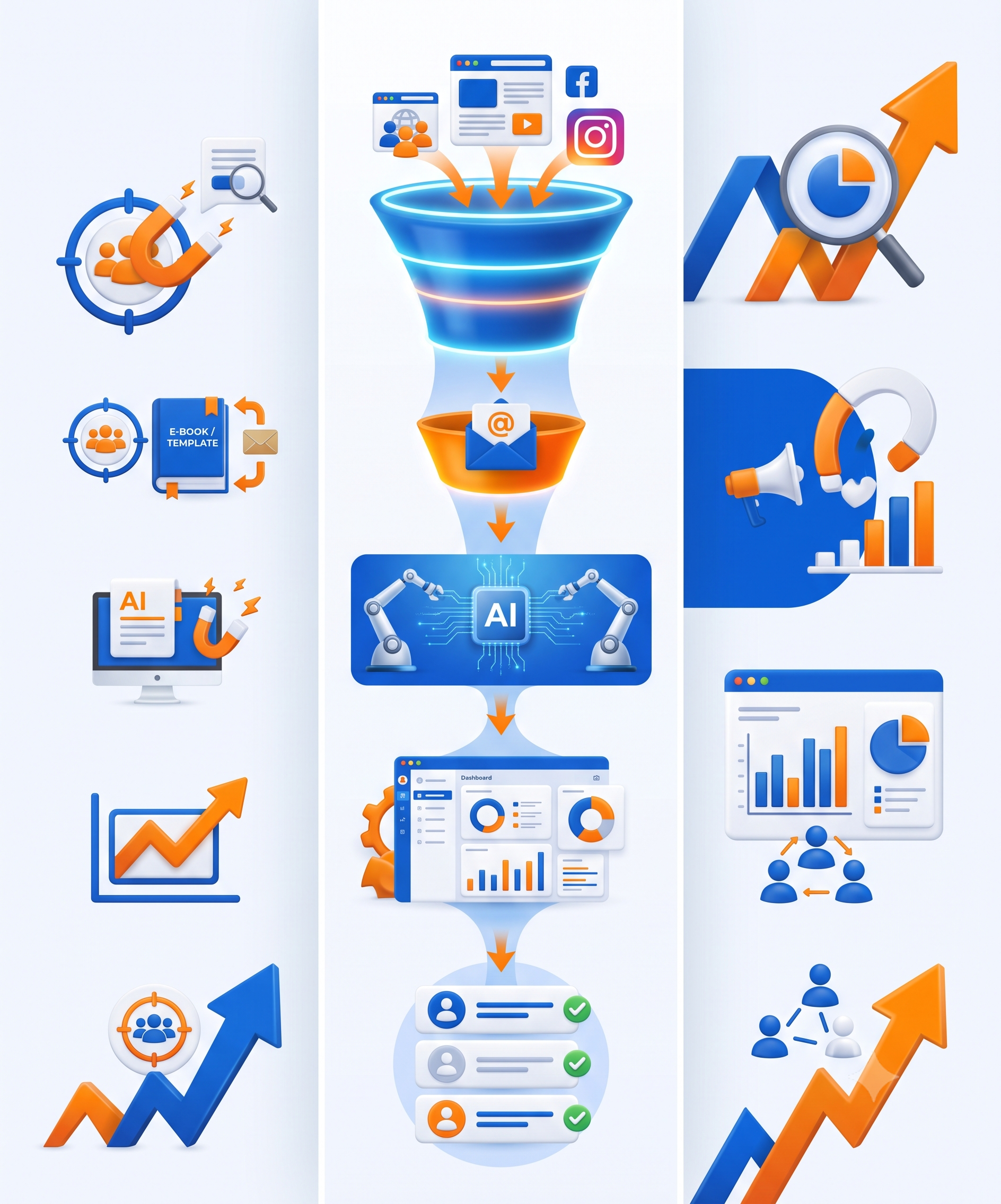
Here’s a mistake I see constantly: a business owner gets excited about 500 new website visitors, only to realize a month later that not one of them turned into a paying customer.
That’s the trap of chasing numbers instead of quality. Traffic feels good on a dashboard. Leads feel good in your bank account. And quality leads — the ones who actually need what you sell and can afford it — are what keep a business alive.
This guide breaks down how to generate quality leads online, step by step, using strategies that work in 2026 and beyond. No fluff, no fabricated promises — just what actually moves the needle.
What Are Quality Leads?
A quality lead is someone who fits your ideal customer profile, has a genuine need for your product or service, and has the intent or budget to act soon.
Compare that to a “leaky bucket” lead: someone who downloaded your free guide out of curiosity, never opens your emails, and never had any intention of buying.
Quality leads typically share these traits:
- They match your target demographic or industry
- They’ve shown active interest, not just passive curiosity
- They have the authority or budget to make a purchase decision
- They’re at the right stage of readiness to consider buying
Difference Between Quality Leads and Random Traffic
Traffic and leads are not the same thing, even though people mix them up constantly.
| Random Traffic | Quality Leads |
|---|---|
| Visits your site once, never returns | Engages repeatedly across channels |
| No clear intent or need | Clear problem they want solved |
| Low or no conversion likelihood | Reasonable to high conversion likelihood |
| Costs you resources with little return | Justifies the marketing spend behind it |
A blog post that goes viral might bring thousands of visitors overnight. If none of them are your target customer, that traffic spike does almost nothing for revenue. Quality beats quantity, every time.
Understanding the Customer Journey
Every lead moves through stages before becoming a customer. Skipping steps or rushing the process usually backfires.
- Awareness — they realize they have a problem
- Consideration — they research possible solutions
- Decision — they compare specific providers, including you
- Purchase — they commit
- Retention — they stay, and hopefully refer others
Your lead generation marketing should meet people where they are in this journey, not push everyone toward a sale on day one.
Build an SEO-Optimized Website
Your website is often the first real interaction a lead has with your brand. If it loads slowly or confuses visitors, they leave before you ever get a chance to convert them.
Website essentials for lead generation
- Fast loading speed on both desktop and mobile
- Clear, benefit-driven headlines above the fold
- Visible calls-to-action on every key page
- Simple contact and quote request forms
Expert tip: Every service page should answer one question — “why should I choose you over the next search result?” If it doesn’t, rewrite it.
Content Marketing for Lead Generation
Content builds trust before a prospect ever talks to your sales team. Blog posts, guides, and case studies answer questions your leads are already searching for.
A SaaS company targeting HR teams might publish “How to Reduce Employee Turnover in 2026.” That single article can attract exactly the right audience, month after month, without ongoing ad spend.
Best practice: Match content to funnel stage. Top-of-funnel content should educate. Bottom-of-funnel content, like comparison pages or case studies, should help someone decide.
Landing Pages That Convert
A generic homepage rarely converts as well as a dedicated landing page built for one specific offer.
Lead Magnets
A lead magnet trades something valuable for a visitor’s contact information. It only works if the value is real.
Effective lead magnet ideas include:
- Free templates or checklists
- Short educational webinars
- Free consultations or audits
- Industry benchmark reports
Avoid generic magnets like “10 Tips for Success.” Specific, practical resources convert far better than vague ones.
Email Marketing Funnels
Once you capture a lead’s email, the real relationship-building begins. Email marketing funnels nurture leads automatically, moving them from curious to convinced.
A simple, effective funnel looks like this:
- Welcome email introducing your brand and value
- Educational email solving a small piece of their problem
- Case study or proof email showing real results
- Direct offer email with a clear next step
Lead nurturing through email consistently produces some of the strongest returns of any digital channel, largely because it’s low-cost and highly targeted.
Google Ads Lead Campaigns
Google Ads captures people actively searching for solutions, which makes it one of the fastest ways to generate sales leads with clear intent.
Pro tip: Use call-only ads for service businesses where phone conversations close deals faster than online forms.
Focus on:
- Tight keyword targeting tied to buying intent
- Dedicated landing pages, not your homepage
- Negative keywords to filter out irrelevant clicks
Facebook Lead Ads
Facebook Lead Ads let prospects submit their information without ever leaving the platform, which reduces friction significantly.
This format works especially well for:
- Local service businesses
- Webinar or event sign-ups
- Free trial or demo offers
Keep forms short. Every extra field you ask for reduces completion rates.
LinkedIn Lead Generation
For B2B lead generation, LinkedIn remains one of the most reliable platforms available. Decision-makers are there, and the targeting options let you reach specific job titles and industries directly.
- Use LinkedIn Lead Gen Forms to reduce drop-off
- Share genuinely useful posts, not constant self-promotion
- Engage in relevant industry groups and discussions
Organic Social Media
Paid ads get attention fast, but organic social media builds long-term trust. Share behind-the-scenes content, client wins, and educational posts consistently.
The goal isn’t viral reach. It’s staying visible and credible to the audience most likely to become leads.
Video Marketing
Video builds trust faster than text alone. Short explainer videos, testimonials, and product demos help prospects understand your value quickly.
Even simple, smartphone-recorded videos work well when they’re genuine and answer real customer questions.
AI Chatbots
AI chatbots can qualify leads instantly, even outside business hours. A well-configured chatbot asks a few smart questions, then routes serious prospects to a sales rep while filtering out casual browsers.
Expert tip: Keep chatbot conversations short and human-sounding. Overly robotic scripts push visitors away instead of converting them.
Marketing Automation
Marketing automation platforms let you nurture leads at scale without manually tracking every interaction. Behavior-based triggers — like someone visiting your pricing page twice — can automatically send a relevant follow-up email or alert your sales team.
This saves time and ensures no promising lead slips through the cracks.
Retargeting Campaigns
Most visitors don’t convert on their first visit. Retargeting campaigns bring them back by showing relevant ads across social media and other websites they browse afterward.
A visitor who viewed your pricing page but left is a much warmer retargeting target than someone who only saw your homepage.
CRO Techniques
Conversion Rate Optimization (CRO) focuses on turning existing traffic into more leads, without spending extra on acquisition.
Simple CRO wins include:
- Reducing form fields to the essentials
- Adding trust badges near submit buttons
- Testing headline variations regularly
- Making phone numbers clickable on mobile
CRM Integration
A CRM keeps every lead interaction organized in one place. Without it, leads get lost in scattered spreadsheets and inboxes.
Good CRM habits include logging every touchpoint, setting follow-up reminders, and tagging leads by source so you know which channels perform best.
Lead Scoring
Not every lead deserves the same attention right away. Lead scoring assigns points based on behavior and fit — like opening emails, visiting pricing pages, or matching your ideal customer profile.
This helps sales teams prioritize the leads most likely to close, instead of treating every inquiry equally.
Analytics and KPIs
You can’t improve lead generation without measuring it. Track these consistently:
- Cost per lead by channel
- Conversion rate from lead to customer
- Time to conversion
- Source attribution for every closed deal
Reviewing these numbers monthly reveals which strategies deserve more budget and which need rethinking.
Common Lead Generation Mistakes
- Chasing traffic volume instead of lead quality
- Sending every lead the same generic follow-up
- Ignoring mobile users during the form-fill process
- Never following up beyond the first email
- Skipping analytics and guessing instead of measuring
Best Lead Generation Tools in 2026
| Category | Popular Tools |
|---|---|
| CRM | HubSpot, Pipedrive, Salesforce |
| Email Automation | Mailchimp, ActiveCampaign, Klaviyo |
| Landing Pages | Unbounce, Leadpages, Instapage |
| Chatbots | Drift, Intercom, Tidio |
| Analytics | Google Analytics, Hotjar, Google Search Console |
Choose tools based on your team size and budget, not just popularity. A freelancer rarely needs the same stack as an enterprise sales team.
Future Trends
AI-driven personalization will keep shaping how leads are nurtured, tailoring content to individual behavior rather than broad segments. Conversational marketing through chat and voice will likely grow, letting prospects get answers instantly instead of waiting on a form submission. And privacy-focused marketing, built around first-party data, will matter more as third-party tracking continues to shrink.
Conclusion
Generating quality leads online isn’t about mastering every channel at once. It’s about understanding your customer journey, building trust through content and consistency, and following up in ways that feel genuinely helpful rather than pushy.
Start with one or two strategies from this guide, measure the results honestly, and build from there.
Call-to-Action
Ready to turn more visitors into real customers? Start by auditing your current lead generation funnel today — identify where prospects are dropping off, and fix that one leak before adding anything new.
Frequently Asked Questions
1. What’s the difference between a lead and a quality lead? A lead is anyone who shows interest, like submitting a form. A quality lead specifically matches your ideal customer profile and has real intent or budget to buy.
2. How long does online lead generation take to show results? Paid campaigns can generate leads within days, while organic strategies like SEO and content marketing typically take a few months to build momentum.
3. What’s the best lead generation strategy for small budgets? Content marketing and organic social media offer strong returns without heavy ad spend, especially when paired with a solid email nurturing funnel.
4. How do I know if my leads are actually high quality? Track conversion rates from lead to customer, not just lead volume. If conversion rates are low, revisit your targeting and lead magnet relevance.
5. Should I focus on B2B or B2C lead generation strategies? It depends on your business model. B2B lead generation tends to favor LinkedIn and email nurturing, while B2C often performs better with social ads and video content.
6. What tools help manage leads most efficiently? A CRM paired with email automation software covers most business needs, letting you track every lead while nurturing them automatically.