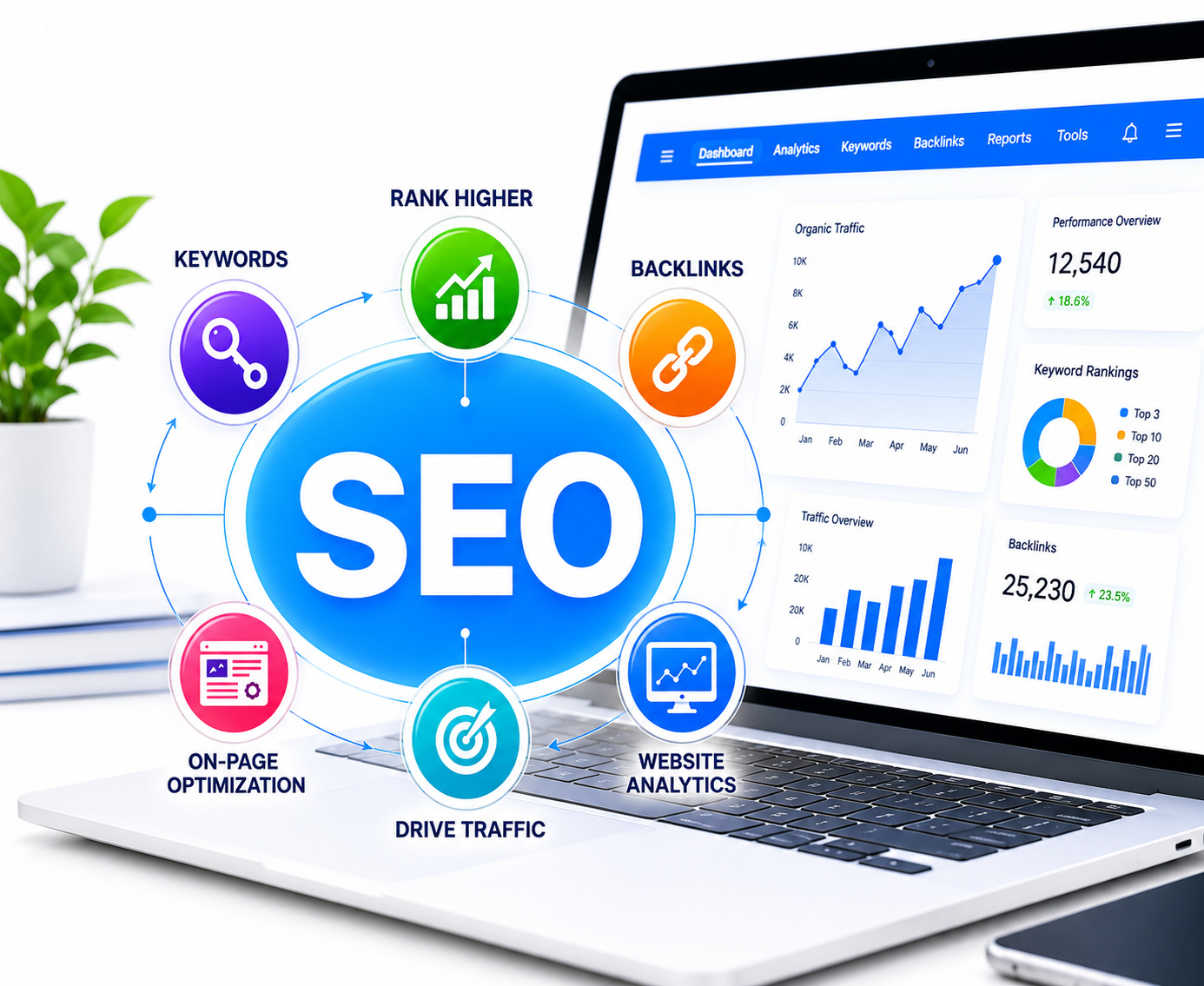



The Rise of Generative Engine Optimization (GEO)
The Rise of Generative Engine Optimization (GEO): What It Is & Why It Matters in 2025 📡 Digital Marketing · 2025 The Rise of Generative Engine Optimization (GEO) — The New SEO You Cannot Ignore AI search engines are changing how people find information online. If your content isn’t showing up in ChatGPT, Perplexity, or Google AI Overviews, you’re already invisible to millions of users. 🗓️ May 19, 2025 ⏱️ 10 min read ✍️ Digital Marketing Expert 🔍 SEO · AI · GEO 📋 Table of Contents What is GEO? GEO vs Traditional SEO Why GEO Matters Right Now How AI Search Engines Work 7 GEO Strategies That Work GEO Optimization Checklist Common GEO Mistakes Frequently Asked Questions Let me ask you something. When was the last time you searched for something online and just clicked the first blue link? Chances are, you noticed a big box at the top of Google that already answered your question. Or maybe you went straight to ChatGPT or Perplexity and got a full answer without visiting any website at all. That’s the world we live in now. And it’s completely changing the rules of digital marketing. This is where Generative Engine Optimization (GEO) comes in. It’s the newest, most important skill any blogger, marketer, or business owner needs to learn in 2025. And if you’re not paying attention to it yet, you’re leaving a massive amount of traffic — and trust — on the table. Let’s break it all down in plain English. 60% of Google searches now end without a click 180M+ ChatGPT users searching for answers daily 3× more brand citations for GEO-optimized content 2025 The year GEO officially entered the mainstream 1. What Exactly Is Generative Engine Optimization (GEO)? In simple words, Generative Engine Optimization (GEO) is the process of making your content good enough that AI-powered search tools — like ChatGPT, Google AI Overviews, Perplexity, Gemini, and Copilot — actually use your content when answering people’s questions. Think of it like this. When someone asks ChatGPT “What is the best way to start a blog in 2025?”, ChatGPT pulls information from websites it finds credible, well-written, and clearly structured. GEO is about making sure YOUR website is one of those sources. 💡 Simple Definition GEO = Optimizing your content so AI engines quote you, cite you, and recommend you — not just so humans click on your link. The word “generative” comes from the fact that these new AI search engines generate a fresh answer every time someone asks a question. They don’t just show links. They write out a full answer, and they use information pulled from websites like yours to build that answer. So instead of just ranking on page one of Google, with GEO you want to be the source that AI chooses to quote. That’s a whole different game. 2. GEO vs Traditional SEO — What’s the Difference? You’ve probably spent years trying to master SEO (Search Engine Optimization). And it still matters! But GEO and SEO are not the same thing. Here’s a clear comparison so you can see exactly what’s changed: Feature Traditional SEO Generative Engine Optimization (GEO) Goal Rank #1 in Google blue links Get cited inside AI-generated answers Search Format A list of 10 links per page A single AI-written paragraph with sources User Behavior User clicks a link and reads your page User reads AI answer; may or may not click Key Signals Backlinks, keywords, page speed, title tags Authority, structure, clarity, original data Content Style Keyword-dense, long-form articles Clear Q&A format, citable facts, expert voice Where it Shows Up Google, Bing, Yahoo search results ChatGPT, Perplexity, Google AI Overviews, Gemini Winning Strategy Build backlinks, optimize meta tags Be the most trustworthy, structured, cited source ⚠️ Important GEO does NOT replace SEO. They work together. A site with strong SEO authority is more likely to be trusted by AI engines. Think of GEO as the next layer on top of your existing SEO strategy. 3. Why GEO Matters So Much Right Now Here’s the uncomfortable truth: AI is eating search traffic. And it’s happening faster than most marketers realize. In 2024, Google introduced AI Overviews to billions of users worldwide. Now, when you search for almost anything, Google generates a full AI-written answer at the top of the page — before you even see any links. Studies show that pages that used to get consistent organic traffic are seeing drops of 20–40% because users are getting their answer from the AI box and never scrolling down. ChatGPT gets over 100 million active users every day. Perplexity is growing at an explosive rate. Microsoft Copilot is embedded inside Windows. These aren’t small experiments anymore. AI search is mainstream — and it’s only getting bigger. “The brands that invest in GEO today will dominate AI search the same way early SEO adopters dominated Google in the 2010s.” Here’s what makes GEO especially powerful: when an AI cites your website as its source, users see your brand name even if they never click your link. It builds trust and authority at a scale that no pay-per-click ad can match. It’s like word-of-mouth, but from an AI that talks to millions of people every single day. 4. How Do AI Search Engines Actually Work? To win at GEO, you first need to understand how these AI search engines decide what content to use. It’s not magic — it’s actually logical once you break it down. Step 1: Retrieval When someone asks a question, the AI first searches the internet (or a pre-built database of indexed pages) for relevant content. This is called Retrieval-Augmented Generation (RAG). The AI essentially looks for the most relevant, credible pages related to the question. Step 2: Reading and Evaluation The AI then reads the top results — not just the titles, but the actual content. It looks for clear answers, authoritative language, well-structured information, and original data or examples. If your content is vague, disorganized, or full of